
The new wave of energy management
Smart electrical panels give homeowners more visibility, control, and safety than a standard “dumb” load center, but not every home truly needs one today. The right choice depends on your plans for EV charging, solar, batteries, and how much you care about monitoring and automating your home’s energy use.
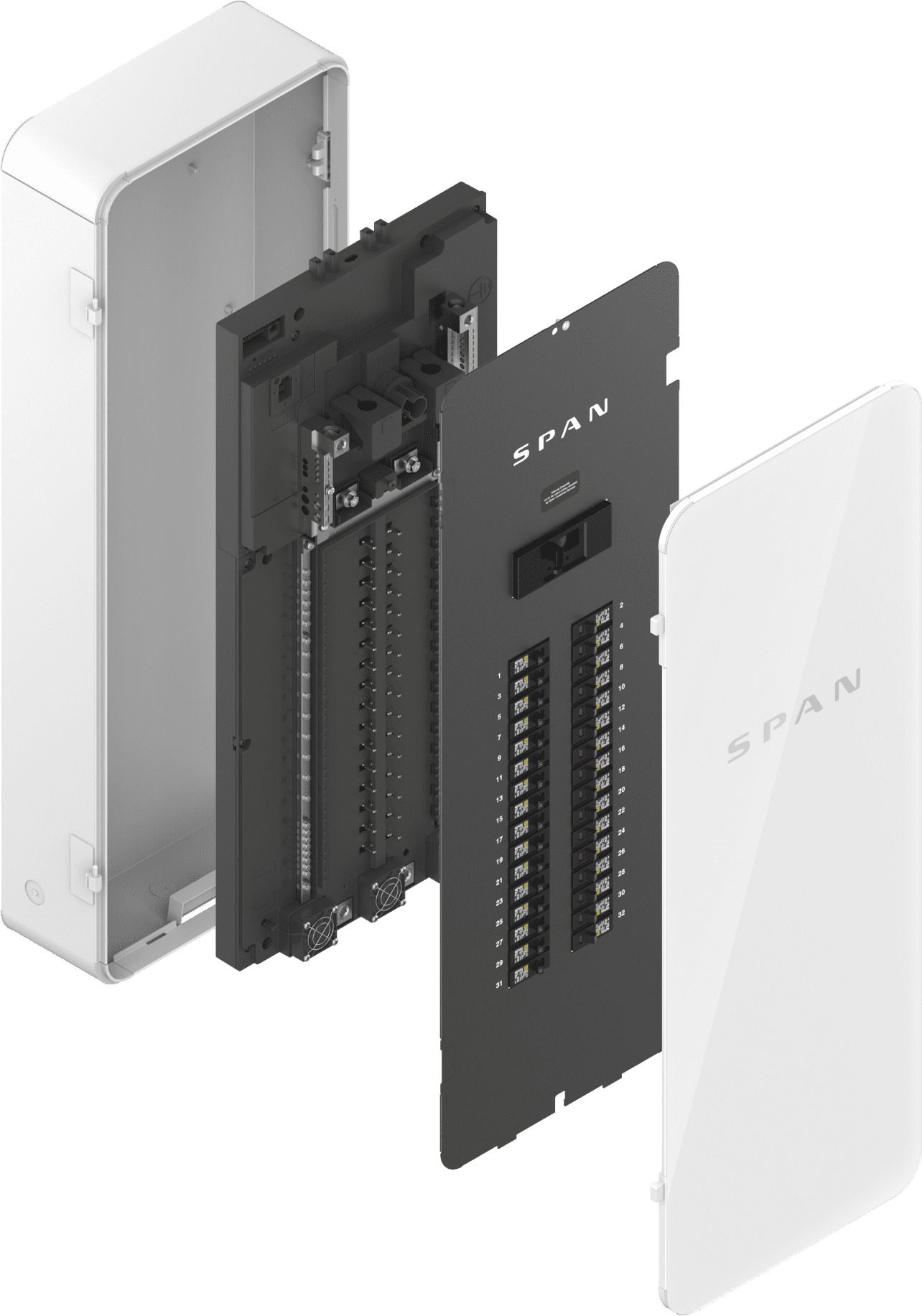
What is a smart panel?
A smart electrical panel is an upgraded breaker panel that adds sensors, software, and connectivity so you can monitor and control your circuits in real time, usually from a phone app. It still distributes power like a traditional panel, but layers on data, remote control, and automated load management to optimize how your home uses electricity.
Traditional load centers, by contrast, simply feed power to breakers and trip when there is a fault or overload, with no detailed energy data or remote control features. Both types keep your home powered and safe, but only smart panels actively “manage” your usage.
Main types of smart panel solutions
There are three broad approaches to “smart” panels in the residential market. The right style depends on whether you’re building, doing a major upgrade, or just want to add intelligence to a panel you already own.
- Fully integrated smart panels (e.g., SPAN, ABB ReliaHome) replace the entire main panel with a unit that has built‑in monitoring, app control, and advanced load management on most or all circuits.
- Add‑on smart modules (e.g., Savant Power Modules, Lumin systems) snap into or connect to an existing panel to monitor and control selected circuits, turning a conventional load center into a hybrid smart system.
- Smart breakers and accessories (e.g., certain Leviton/other OEM products) use individual Wi‑Fi or networked breakers that provide usage data and limited remote control on a per‑circuit basis.
Key benefits of smart panels
Smart panels deliver benefits in four big categories: visibility, control, integration, and safety. How valuable these are depends on your lifestyle and equipment.
- Real‑time energy monitoring: See which circuits and appliances are using power, often down to individual loads, which helps identify waste and reduce bills.
- Remote control & automation: Turn circuits on/off from an app, set schedules, and prioritize essential loads (like refrigerators or medical devices) automatically during outages or when demand is high.
- Solar, battery, and EV integration: Smart panels can act like an “air traffic controller” between the grid, your solar array, batteries, and EV charger, maximizing self‑consumption and avoiding service overloads or expensive upgrades.
- Enhanced safety and diagnostics: Many systems can detect abnormal usage patterns, power quality issues, and potential overloads earlier, and some can shut down circuits proactively before they become unsafe.
Smart panel vs standard load center
Both smart panels and traditional load centers safely distribute power; the difference is how much insight and control you get. For many code‑minimum installations, a standard panel is still completely adequate and more affordable.
Do you actually need a smart panel?
Many homeowners do not strictly “need” a smart panel today; a well‑sized, modern standard load center installed by a licensed electrician is usually enough for basic lighting and outlet loads. However, smart panels start to make strong financial and practical sense in several common scenarios.
You are a good candidate for a smart panel if:
- You plan to add or already have solar, home batteries, or one or more EV chargers, especially on a 100–125 A service where capacity is tight.
- You want detailed energy data to cut costs, or you live in an area with high electricity rates or time‑of‑use pricing (common in California).
- You depend on backup power and need to automatically prioritize critical loads during an outage instead of relying on a small “critical loads” subpanel.
A standard load center is often enough if:
- Your home has modest electrical demands, no plans for solar/EV/battery in the next 5–10 years, and no persistent tripping or capacity issues.
- You’re mainly replacing an old or unsafe panel for safety and code reasons, and you don’t care about app control or circuit‑level analytics.
- Your budget is tight and you’d rather spend on insulation, HVAC upgrades, or more immediate efficiency improvements.
At Ri Electric we are certified installers of Span, Franklin WH, and many others for smart energy management. We focus on a aesthetically pleasing install to limit exposed conduits and ugly junction boxes and fittings. We strive for a next level install and focus less on pumping out installs and more on client satisfaction and superior performance.
We are consistently frustrated with solar and other electrical companies coming in and slapping up whatever they want with no regard for how the product looks on the customers house. We believe a beautiful home starts with well hidden utilities and infrastructure and we don’t compromise for cost savings to inflate our profits.